
Can You Sleep in Acuvue Oasys? The Answer Your Eye Doctor Might Not Give You
By Julie Sennett
·14 min read
The Short Answer Nobody Gives You
Yes, you can sleep in Acuvue Oasys. Your eyelids will close, the lenses will stay in, and you'll wake up the next morning. That part is straightforward.
The real question — the one worth actually answering — is whether you should. And the answer to that depends on where you live, what your eyes are like, and honestly, a little bit of luck.
I've worked in eye care for 15 years. I've seen patients who wore Acuvue Oasys overnight for years without a single issue. I've also seen patients who tried it once and ended up in my office the next morning with red, irritated eyes and a lens practically glued to their cornea. Let me walk you through everything you need to know before you decide.
Medical disclaimer: I am not a doctor. The information provided on this page is for general educational purposes only. You are not receiving medical advice or being given a diagnosis on this site. Please read Contacts Advice Terms of Use before continuing.
Before We Go Further — Why Are You Asking?
There are actually two very different reasons someone might be asking this question, and they need different answers. The first is the person who wants to sleep in their Acuvue Oasys lenses intentionally — maybe they travel frequently, work night shifts, or just find it convenient not to deal with lens removal every night. The second is the person who fell asleep on the couch watching Netflix with their lenses in and woke up at 2am in a mild panic wondering if they've done something terrible to their eyes. If that's you, you can relax.

Accidentally sleeping in your contacts once in a while is not an emergency. Your eyes may feel dry, gritty, or slightly irritated when you wake up, and the lens might feel like it's stuck to your cornea. Use rewetting drops, blink slowly, wait a few minutes, and the lens should loosen up. Rinse and replace with a fresh pair if you're near the end of your two-week cycle. One accidental overnight wear is very unlikely to cause any lasting harm in an otherwise healthy eye. The risks I discuss in this article are primarily associated with making overnight wear a regular habit — not the occasional unplanned nap.
What Acuvue Oasys Is Actually Designed For
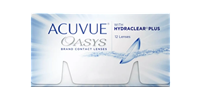
Acuvue Oasys (the original two-week lens, not the 1-Day version) is made from senofilcon A, a silicone hydrogel material with a Dk/t of 147. That number matters. It measures how much oxygen passes through the lens to your cornea. For reference, your cornea has no blood vessels — it gets all its oxygen directly from the air and your tears. The higher the Dk/t, the more oxygen gets through, and the safer sleeping with the contact lenses becomes.
147 is high. It's one of the reasons Acuvue Oasys became one of the best-selling contact lenses in the world.
But high oxygen transmissibility alone doesn't make a lens safe for overnight wear. It's a necessary condition, but it's far from the only one.
Is Acuvue Oasys FDA Approved for Overnight Wear?
Yes. In the United States, Acuvue Oasys is FDA approved for up to 6 nights/7 days of continuous wear. That means you can wear them without removing them for up to six consecutive nights — sleeping in them each night — before you need to take them out, clean them (or discard them if you're at the end of the two-week period), and give your eyes a break.
Contact lens manufacturers and eye doctors call this "extended wear" — industry shorthand for wearing lenses continuously through sleep. If you've ever seen that term on a contact lens box or heard it from your optometrist, that's what it means: you can keep them in overnight. Not all contact lenses are approved for this. Most are "daily wear only," meaning they must come out before you sleep. Acuvue Oasys is one of the relatively small number of lenses where the FDA has said overnight wear is permitted.
What About Canada? Here's Where It Gets Interesting
Health Canada has not approved Acuvue Oasys for overnight wear. In Canada, it's approved for daily wear only — meaning you're supposed to take them out every night before bed.
Now here's the question that genuinely puzzles people: how can the exact same lens, made by the same company, from the same material, be approved for overnight wear in one country and not the other?
The honest answer is that regulatory approval processes are different. The FDA and Health Canada use different frameworks, different clinical thresholds, and different risk tolerances. Health Canada tends to be more conservative with extended wear approvals — not necessarily because the science is different, but because the regulatory bar is set differently.
It doesn't mean the lens is unsafe in Canada. It means the manufacturer chose not to pursue or hasn't yet received extended wear approval through the Health Canada process. Johnson & Johnson (the makers of Acuvue Oasys) may have applied only in certain markets, or Health Canada may require additional clinical data before approving it.
The lens is the same. The oxygen transmissibility is the same. The cornea is the same. The regulatory difference is essentially administrative, not scientific. But that doesn't mean you should ignore it. Your eye doctor in Canada is legally and professionally bound by Health Canada's approved indications.
So What IS Approved for Overnight Wear in Canada?
If you're in Canada and your eye doctor has determined that overnight wear is appropriate for you, there are contact lenses that have received Health Canada approval for it. Air Optix Night & Day Aqua (by Alcon) is the most well-known — it's approved for up to 30 consecutive nights of continuous wear in both the US and Canada, and has one of the highest oxygen transmissibility ratings of any lens on the market (Dk/t of 175). Biofinity (by CooperVision) is another option approved for extended wear in Canada, approved for up to 6 nights of continuous wear — the same schedule that Acuvue Oasys is approved for in the US. If overnight wear is something you genuinely want to do and you're in Canada, these are the lenses worth asking your eye doctor about rather than pushing the boundaries with a lens that isn't approved for it.
Even If It's Approved, Should YOU Sleep in Them?
This is where I want to be really direct with you, because the FDA approval number can give people a false sense of security.
In my 15 years of clinical experience, the number of patients who can genuinely tolerate overnight wear without any issues is small. I'd estimate maybe 10–15% of contact lens wearers can do extended wear comfortably and safely long-term. The rest fall somewhere on a spectrum from "occasional discomfort" to "this was a terrible idea."
Here are the factors that determine which group you fall into:
Tear Film Quality
This is the biggest one. If you have any degree of dry eye — even mild, even subclinical — overnight wear will make it worse. During sleep, your blink rate drops to zero and your tear production slows significantly. Lenses that are comfortable during the day can feel like sandpaper when you wake up if your tear film isn't robust.
Corneal Health
Some people's corneas are simply more sensitive to reduced oxygen, even with high-Dk lenses. If you've ever woken up with red eyes after sleeping in contacts, that redness is your cornea telling you it's not happy.
How Long You've Been Wearing Contacts
Long-term contact lens wearers sometimes develop subtle changes to their corneal epithelium over time — not necessarily dangerous, but it can affect how well they tolerate extended wear.
Your Sleeping Environment
Air conditioning, ceiling fans, and forced air heating all reduce ambient humidity and dry out your eyes faster while you sleep. The same person might do fine in a humid climate and struggle in a dry one.
The Lens Age
Sleeping in a fresh pair of Acuvue Oasys on day 1 of a two-week cycle is very different from sleeping in them on day 12. Protein deposits, lipid buildup, and reduced oxygen transmissibility in an older lens make overnight wear increasingly risky as the lens ages.
Fit
A lens that fits perfectly for daily wear might have slightly different movement dynamics during sleep, when your eyes are closed and tear circulation is reduced. A poorly fitting lens retained overnight can cause localized hypoxia — oxygen deprivation — even with a high-Dk material.
What Can Actually Go Wrong?
I don't want to scare you, but you should know what the risks look like in practice.
Corneal Neovascularization
Blood vessels growing into the normally avascular cornea in response to chronic oxygen deprivation. Usually reversible in early stages if you stop extended wear, but can cause permanent changes if it progresses.
Microbial Keratitis
This is the serious one. Sleeping in contact lenses increases your risk of microbial keratitis — corneal infection — by roughly 6–8x compared to daily wear. Bacterial keratitis can cause permanent vision loss if not treated promptly. It's rare, but it's real, and it's why eye doctors are cautious about overnight wear recommendations.
Giant Papillary Conjunctivitis (GPC)
An immune response to deposits on the lens surface, more common with extended wear. Causes itching, mucus discharge, and lens intolerance.
Morning Lens Adhesion
Waking up to find your lens has essentially dried onto your cornea. This is painful and scary, and while it usually resolves with rewetting drops and patience, it can cause minor corneal abrasions.
If You Sleep in Acuvue Oasys, Do You Need to Replace Them More Often?
This is a question I don't see answered very often, and it's a practical one. The official answer from Johnson & Johnson is that Acuvue Oasys remains a two-week lens regardless of whether you wear them as daily wear or extended wear. The replacement schedule doesn't change based on how many nights you sleep in them.
But here's the nuance: the two-week schedule is based on calendar time, not hours of wear. A lens worn 8 hours a day for 14 days has accumulated about 112 hours of wear. A lens slept in every night for 14 days has accumulated closer to 200+ hours of wear. That's significantly more time on your eye, more exposure to deposits, more protein buildup, and more cumulative stress on the material.
So while Johnson & Johnson doesn't officially shorten the replacement interval for extended wear, the practical reality is that a lens worn overnight becomes an "older" lens faster. Some eye doctors will recommend replacing more frequently if you're doing regular overnight wear — moving to weekly replacement rather than two-week, for example, simply because the lens has done more work in the same calendar period.
My personal take after years in eye care: if you're sleeping in your Acuvue Oasys regularly, err on the side of replacing them earlier rather than later. The cost difference between replacing at 10 days versus 14 days is minimal. The difference in lens comfort and corneal health can be significant.
Speaking of cost:
If you're going through lenses faster, it's worth making sure you're getting the best price. Compare Acuvue Oasys prices across 9 retailers →
Wait — If I'm Doing Extended Wear, What About Showering?
This is one of those questions that exposes a real inconsistency in how contact lens advice gets communicated, and I think you deserve a straight answer.
You've probably been told not to shower with your contact lenses in. That advice is correct and I stand behind it. Tap water — even clean, treated municipal water — can contain Acanthamoeba, a microscopic organism that can cause a rare but devastating corneal infection called Acanthamoeba keratitis. It's difficult to treat, slow to resolve, and in serious cases can cause permanent vision damage. This is not a theoretical risk invented by overly cautious optometrists. It's real, and it's why the guidance exists.
So here's the contradiction: if you're doing extended wear and keeping your lenses in around the clock, you are by definition showering with them in — every single day. And yet the FDA has approved this lens for extended wear. How do those two things coexist?
The honest answer is that the risk doesn't disappear during extended wear; it's just an accepted tradeoff. The extended wear approval is based on oxygen transmissibility and corneal safety data, not on water exposure risk. The FDA approval essentially says the lens material is safe enough for overnight use — it doesn't say showering with lenses is without risk.
What eye care professionals generally advise for extended wear patients is to minimize water exposure where possible. Keep your eyes closed in the shower, avoid submerging your face, and absolutely never swim in a pool, lake, or ocean with your lenses in regardless of your wear schedule. The risk from a brief shower with closed eyes is considered low but not zero. The risk from swimming is significant enough that even extended wear patients are advised to use daily disposable lenses or goggles over their contacts in the water.
The reason you're told to remove lenses before showering during daily wear is partly because it's easy to do so — you're taking them out at night anyway. During extended wear, that option isn't on the table without defeating the purpose entirely. So the practical guidance shifts from "don't shower with them" to "shower with them if you must, but keep your eyes closed and be careful."
It's not a perfect answer. It's a risk management answer. And it's worth having this conversation explicitly with your eye doctor when discussing whether extended wear is right for you — because most practitioners don't volunteer this information unless you ask.
My Honest Recommendation
If you're in the US, your eye doctor has approved extended wear, you have healthy eyes, a good tear film, and you're committed to replacing your lenses on schedule, then occasional overnight wear is probably fine. Emphasis on occasional.
If you're doing it regularly — multiple nights per week, every week — I'd encourage you to have an honest conversation with your eye doctor about whether your corneas are tolerating it well. A quick slit lamp examination can show early signs of stress that you'd never notice yourself.
If you're in Canada or another country where Acuvue Oasys isn't approved for overnight wear, your eye doctor should be your guide. The regulatory difference isn't necessarily scientific, but your practitioner's recommendation is based on your individual eyes and that matters more than what the FDA says.
And if you've ever woken up with red, irritated, or sticky eyes after sleeping in your lenses, your eyes are telling you something. Listen to them.
The Bottom Line
Can you sleep in Acuvue Oasys? In the US, yes — they're FDA approved for up to 6 nights of extended wear, meaning you can sleep in them for up to six consecutive nights. In Canada and many other countries, no. They're approved for daily wear only, and the regulatory difference comes down to approval processes, not lens science.
Should you? That depends entirely on your eyes, your tear film, your environment, and your commitment to proper lens care. In my experience, most people are better off taking their lenses out at night, but a minority of people can genuinely tolerate extended wear without issues.
Talk to your eye doctor. Get your eyes checked regularly if you do sleep in them. And replace your lenses on time, every time.
Frequently Asked Questions
Can you sleep in Acuvue Oasys contact lenses?
In the United States, yes — Acuvue Oasys is FDA approved for up to 6 nights of continuous overnight wear. In Canada and many other countries, they are approved for daily wear only and should be removed before sleeping.
How many nights in a row can you sleep in Acuvue Oasys?
In the US where extended wear is FDA approved, Acuvue Oasys can be worn for up to 6 consecutive nights before they need to be removed, cleaned or discarded, and your eyes given a break.
What happens if you accidentally sleep in your Acuvue Oasys?
One accidental overnight wear is unlikely to cause lasting harm in an otherwise healthy eye. Your eyes may feel dry, gritty, or slightly irritated when you wake up, and the lens might feel stuck. Use rewetting drops, blink slowly, and wait a few minutes for the lens to loosen before removing it.
Is Acuvue Oasys approved for overnight wear in Canada?
No. Health Canada has not approved Acuvue Oasys for overnight wear — it is a daily wear lens in Canada. If you want lenses approved for overnight wear in Canada, ask your eye doctor about Air Optix Night & Day Aqua or Biofinity, both of which have Health Canada extended wear approval.
Do you need to replace Acuvue Oasys more often if you sleep in them?
Officially, Acuvue Oasys remains a two-week replacement lens regardless of wear schedule. However, sleeping in them accumulates significantly more hours of wear in the same calendar period, so many eye doctors recommend replacing them earlier — closer to 10 days rather than 14 — if you're doing regular overnight wear.
Can you shower while doing extended wear with Acuvue Oasys?
If you are doing extended wear and keeping your lenses in around the clock, you will inevitably shower with them in. Eye care professionals advise keeping your eyes closed in the shower and never swimming with contacts in, as tap water and pool/lake water can contain organisms that cause serious eye infections.
Compare Acuvue Oasys Prices
Looking for the best price on Acuvue Oasys? I track prices across 9 major retailers so you always pay less.
Looking for the lowest price on contact lenses?
Compare prices across 9 major retailers in seconds — always free, no account needed.
Compare Contact Lens Prices →