Hubble Contacts: Are They Worth the Hype?
By Julie Sennett
·8 min read
It's a scenario I see constantly: you're scrolling through social media and an ad pops up for Hubble. They promise a box of daily disposables for just a dollar, delivered right to your door. It sounds like a dream for anyone tired of the high cost of contact lenses, but as a contact lens specialist, I have to ask: what are you actually putting in your eyes?
Hubble has disrupted the industry with its direct-to-consumer subscription model, but there is a lot more to the story than just a cheap first box. Let's dive into the technical details and the "Material Truth" behind this brand.
The Hubble Lenses
The Hubble lineup has expanded from its original, basic hydrogel to a more modern range including advanced silicone hydrogel materials. While the company still relies on the subscription model I've previously critiqued, their product variety now addresses a wider range of eye health needs.
1. Hubble Classic Daily
This is the original "dollar box" lens that launched the brand. It is a no-frills option designed for basic vision correction at the lowest price point.
- Material: Methafilcon A (original) or Hioxifilcon A (updated "2.0" version).
- Parameters: Base Curve 8.6 mm, Diameter 14.2 mm.
- Breathability (Dk/t): Low (18–26), which is significantly lower than modern premium brands.
- Comparison: Comparable to legacy brands like Focus Dailies (which Alcon has largely phased out in favor of better technology). They do not compare to the premium, highly breathable lenses your eye doctor likely recommends today.
- Price: $1.00 for a 15-day starter pack; approximately $20 per eye/month thereafter.
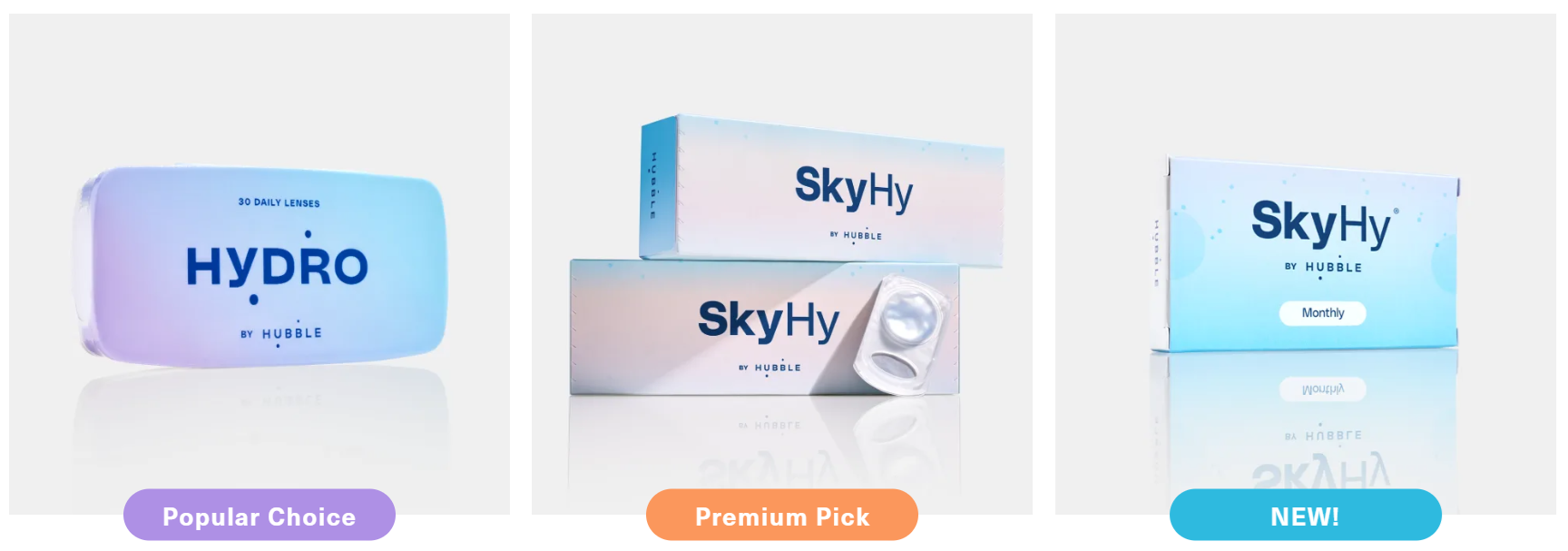
2. Hydro by Hubble (Daily)
Marketed for those who struggle with dryness, these lenses focus on water retention rather than just oxygen flow.
- Material: Hioxifilcon A, which naturally attracts water molecules to enhance moisture.
- Parameters: Base Curve 8.4 mm, Diameter 14.2 mm.
- Special Feature: Slim, low-waste packaging with "Hygienic Touch" technology, ensuring you only touch the outer surface of the lens.
- Comparison: Proclear 1-Day (Omafilcon A). Both are non-silicone hydrogel lenses that emphasize "biomimetic" properties to attract water and help with dry-eye symptoms.
- Price: Around $14.99 per eye for the first 30-day supply.
3. SkyHy by Hubble (Daily)
SkyHy is Hubble's premium daily offering, designed for maximum breathability by using silicone hydrogel.
- Material: Olifilcon B, a silicone hydrogel that allows significantly more oxygen to reach the cornea.
- Breathability (Dk/t): High (150), which is roughly six times more breathable than the Classic Daily.
- Parameters: Base Curve 8.7 mm, Diameter 14.1 mm.
- Comparison: Competes with premium silicone hydrogels like Acuvue Oasys 1-Day or Dailies Total1.
- Price: First order around $17.99 per eye; standard price around $32.99 per eye.
4. SkyHy by Hubble (Monthly)
For wearers who prefer the durability of a reusable lens, Hubble recently introduced this monthly version of their SkyHy line.
- Material: Olifilcon A, another premium silicone hydrogel material.
- Breathability (Dk/t): Extremely high (175), the highest in Hubble's lineup.
- Parameters: Base Curve 8.7 mm, Diameter 14.0 mm.
- Special Feature: Designed for durability and resisting protein deposits over a full 30 days of wear.
- Comparison: Comparable to major monthly brands like Biofinity or Air Optix Night & Day.
- Price: Often launched with steep introductory discounts (e.g., 40–70% off) for subscription starters.
The Subscription Model: Convenience at a Cost?
Hubble operates primarily on a subscription-only model.
- The "Dollar" Hook: You get your first 15 pairs for $1 (plus shipping), but after that, you are automatically billed for monthly shipments.
- Locked-In Pricing: Once you subscribe, you may miss out on sales or rebates available elsewhere.
- Cancellation Hurdles: I've seen many reports from frustrated consumers who found it difficult to cancel their shipments once they were in the "Hubble loop".
What About The Occasional Contact Lens Wearer?
Subscription models for occasional contact lens wearers can be a "double-edged sword." While they offer unparalleled convenience, the fixed nature of a subscription can actually cost you more if you don't wear lenses daily.
For an occasional wearer, the best strategy is often Daily Disposable lenses purchased on an as-needed basis, rather than a rigid monthly subscription.
The Occasional Wearer's Cost-Benefit Analysis
If you only wear contacts 1–3 days per week, daily disposables are mathematically your best option.
- Cost Efficiency: You only "pay as you go." With monthly lenses, you must discard the pair after 30 days regardless of how many times you actually wore them.
- Maintenance Savings: Dailies require zero cleaning solutions or storage cases, which can save a part-time wearer roughly $120–$240 annually in ancillary supplies.
- Hygiene: Occasional wearers are more likely to let monthly lenses sit in old solution, which significantly increases the risk of infection. Dailies provide a fresh, sterile lens every time.
Subscription Pros vs. Cons for Occasional Users
| Feature | Subscription Impact for Occasional Users |
|---|---|
| Convenience | Great for "setting and forgetting," ensuring you always have lenses for that spontaneous night out. |
| Stockpiling Risk | A major downside. If your delivery cadence is set for daily wear but you only wear them twice a week, you will quickly accumulate a massive surplus. |
| Flexibility | Some services (like Hubble) allow you to delay or skip shipments, which is essential for occasional users. |
| Locked Pricing | You might miss out on bulk-buy rebates (often $100+) available at major retailers that can make dailies even cheaper than subscription brands. |
The "Hybrid" Strategy
In 2026, many savvy patients are moving toward a hybrid approach: wearing glasses for work/screen time and using "occasional wear" daily contacts for social or athletic activities. This balance helps avoid "subscription fatigue" and ensures you aren't paying for lenses that are just sitting in your drawer.
Julie's Pro Tip: If you do choose a subscription, look for one that offers flexible intervals. If you only wear contacts on weekends, set your "monthly" shipment to arrive every 90 days instead. This keeps your supply fresh without the waste.
Why Do They Sell Other Brands Now?
You may have noticed that Hubble's website now lists major brands like Acuvue, Biofinity, and Air Optix. The Reason: Many customers found that the basic Hubble lens didn't fit their eyes or provide enough comfort. By selling "mainstream" brands through their sister site, ContactsCart.com, they can keep customers who need better technology or specific parameters (like toric or multifocal lenses) within their ecosystem.
The Bottom Line: Who Is Hubble For?
| A Good Option For… | NOT A Good Option For… |
|---|---|
| People with very simple prescriptions and no astigmatism. | People who suffer from dry eyes or spend long hours at computers. |
| Users who prioritize convenience and automated shipping above all else. | Anyone who needs high breathability for long-term corneal health. |
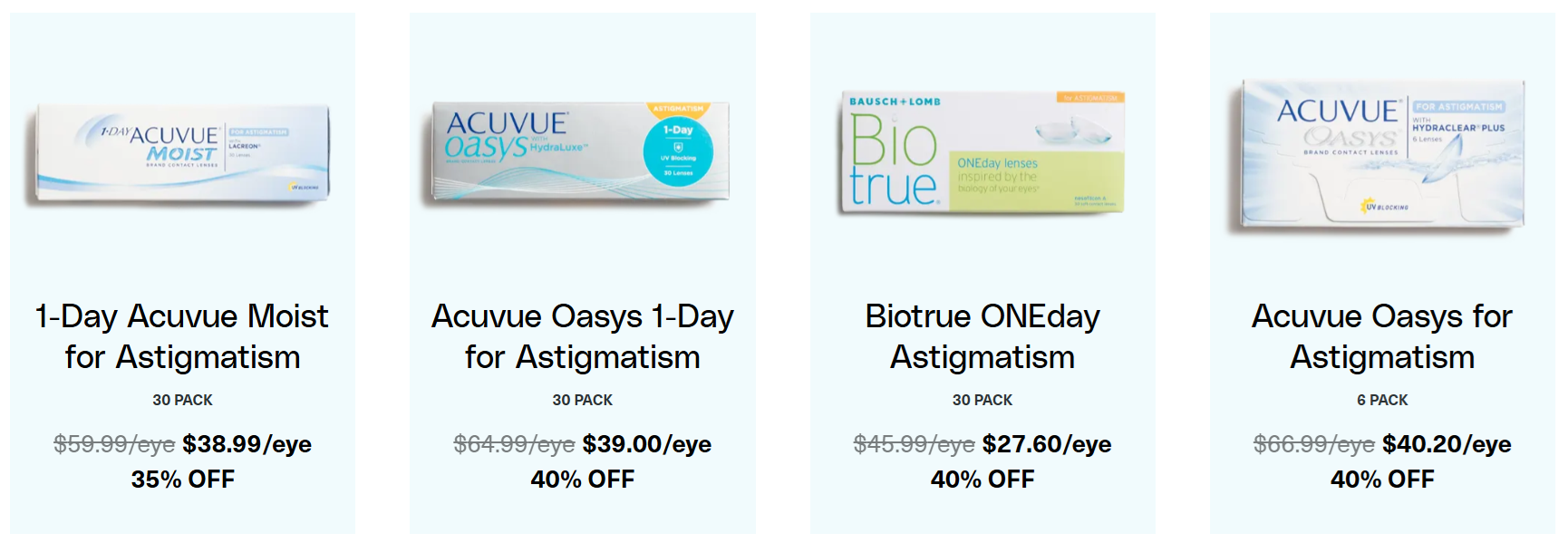
| Occasional wearers who want a cheap backup for glasses. | People with astigmatism or those requiring multifocal lenses. |
Julie's Advice: Your eyes only receive oxygen through the air. Don't starve them with 20-year-old plastic just to save a few dollars a month. If you want the convenience of a subscription but the health of a modern lens, use the Contacts Advice price comparison tool to find the best deals on high-quality silicone hydrogels.
Remember: In the USA, you must have a valid contact lens prescription for a specific brand to order online. Do not attempt to use a glasses prescription to order Hubble lenses; the fit and power will not be the same.
Whether you're sticking with a trusted name like Acuvue or Biofinity, or trying out a newer option like SkyHy, the reality is that prices for the exact same box can fluctuate wildly between retailers. Don't leave your savings to chance or get locked into a subscription that may be charging you a premium for convenience. Visit the Contacts Advice price comparison tool today to instantly compare real-time prices and find the absolute lowest per-box costs across all major online retailers. It's free, it's fast, and it's the best way to ensure you never pay more than you have to for your contact lenses again.
Looking for the lowest price on contact lenses?
Compare prices across 9 major retailers in seconds — always free, no account needed.
Compare Contact Lens Prices →